21-04-2026
The Therapeutic Language of Materials in Indian Healthcare Architecture Ravideep Singh
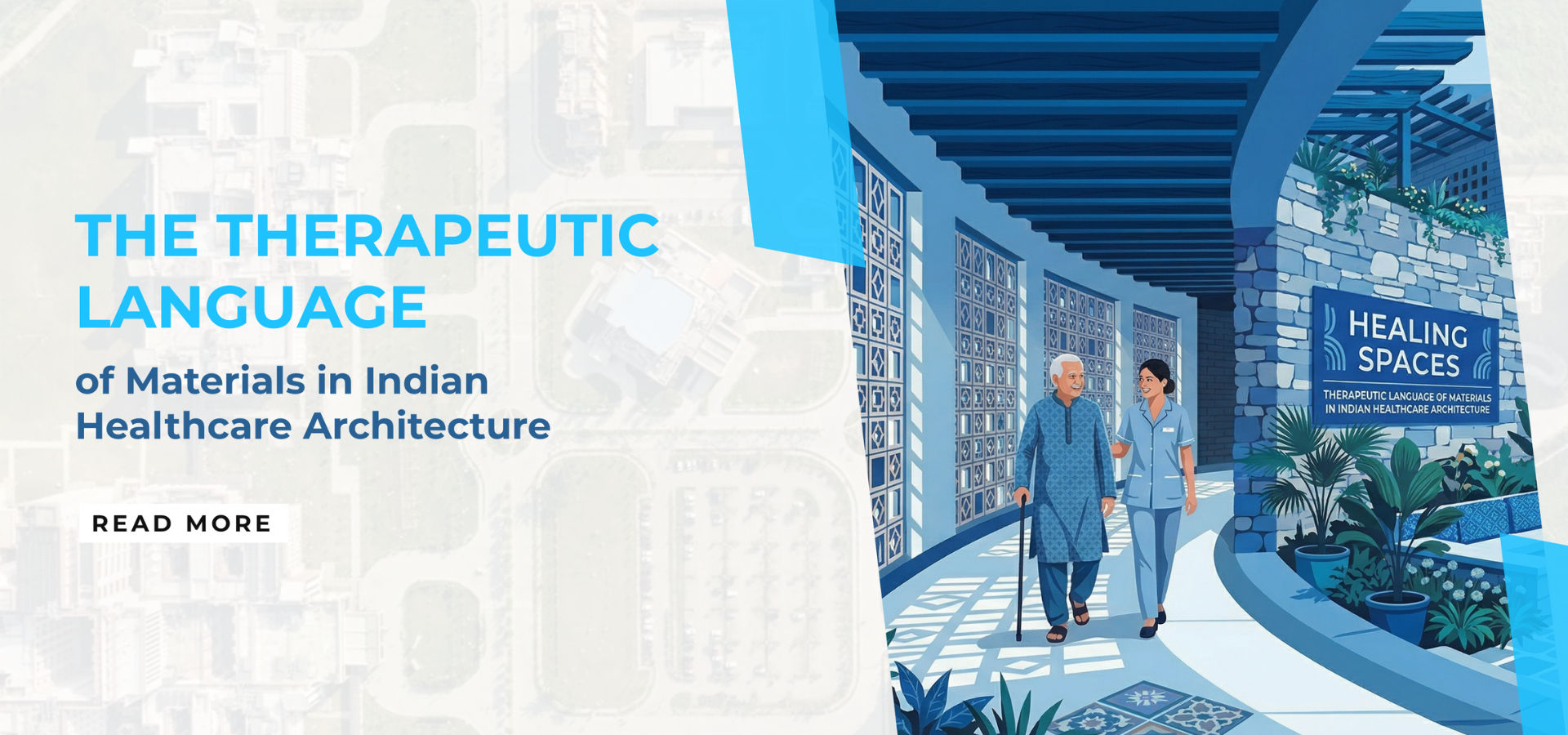
The Therapeutic Language of Materials in Indian Healthcare Architecture
In healthcare architecture, discussions often centre on spatial planning, natural light, and circulation. Yet there is another dimension of design that operates at a more intimate scale—one that patients can touch, observe closely, and experience instinctively. Materials form the tactile vocabulary of care. They are the surfaces encountered during moments of vulnerability, the textures seen during prolonged stays, and the physical elements that either foster comfort or create distance.
After more than two decades of designing healthcare environments across India, materiality has consistently emerged as the point where intention becomes experience—where architectural decisions are felt rather than explained. Stone cladding in a reception area, the finish of a courtyard wall, or the warmth of a timber ceiling all carry therapeutic weight. These choices influence stress levels, sensory comfort, and the sense of familiarity that allows patients to feel at ease in unfamiliar circumstances.
Materials as Cultural Touchstones
India’s material heritage offers something invaluable to healthcare design: recognition. Locally sourced stone, regional timber, and traditional surface treatments create immediate connections to place and memory. A Jaisalmer sandstone wall in Rajasthan, Kota stone flooring in central India, or laterite accents in a coastal healthcare facility communicate belonging without explanation.
At the Paras Yash Kothari Hospital in Kanpur, serving peri-urban communities, this principle informed key material decisions. Primary public-facing surfaces and plinth zones are articulated in locally quarried buff sandstone from the Mirzapur–Chunar belt—a material historically associated with institutional architecture across Uttar Pradesh. Selected for its durability, low maintenance, and favourable thermal mass, the stone moderates surface temperatures and reduces radiant heat gain in Kanpur’s extreme summer climate, while lending the building a grounded, contextual character.
Within public interiors and transitional zones, the palette is complemented by regionally sourced hardwoods, including certified Sheesham and engineered teak. Used selectively in wall panels, ceiling soffits, and wayfinding elements, these timber accents soften the clinical environment while being detailed with hospital-grade finishes and low-VOC coatings to ensure hygiene and compliance with indoor air quality standards.
A key dimension of the project was the conscious engagement of local stone-finishing and carpentry communities from the Chunar–Banda–Kanpur corridor. Artisans were involved in hand-dressing stone panels, edge profiling, and the precision installation of crafted timber screens and fins. This collaboration enabled tight control over joint tolerances, surface textures, and detailing quality, while strengthening regional supply chains and preserving indigenous craftsmanship.
Evidence-based design research shows that natural materials reduce stress and support well-being. In the Indian context, this effect is amplified when materials also carry cultural resonance, when stone paving echoes familiar public spaces or timber screens reinterpret vernacular patterns. Here, therapeutic value lies as much in memory as in material performance.
Climate-Responsive Materiality
India’s climatic diversity demands material strategies that respond directly to geography. In hot-dry regions, high thermal mass materials such as stone help regulate indoor temperatures, while in humid coastal areas, finishes must balance moisture resistance with breathability. Traditional Indian architecture has long embedded this intelligence through courtyards, verandahs, and regionally appropriate material choices.
At large institutional campuses such as AIIMS Guwahati, material selection addressed seismic resilience and high rainfall conditions while meeting contemporary clinical standards. Drawing from vernacular material logic allowed the campus to remain technically robust while maintaining an experiential connection to place.
Sensory Comfort Through Tactile Diversity
Healthcare interiors often default to sterile uniformity—polished vitrified tiles, painted gypsum walls, and metal ceilings. While hygienic, such environments can heighten stress through sensory monotony. Introducing tactile variation through carefully selected materials alters this experience.
Wood introduces warmth and acoustic softness; stone provides a sense of solidity and grounding; textured surfaces add visual depth without compromising cleanability. At Sarvesh Healthcity in Hisar, earth-toned palettes and materials drawn from the surrounding landscape help create restorative environments that support recovery rather than overwhelm patients.
Colour, intrinsic to material choice, reinforces this approach. The ochre of sandstone, the muted greys of stone, and the warmth of timber move away from the stark whites and clinical blues that dominate conventional hospitals, creating spaces that feel calmer and more humane.
Sustainability as Regional Stewardship
Material selection also operates as a form of stewardship. Locally sourced materials reduce transportation emissions, lower embodied energy, and support regional economies. This approach is particularly relevant in tier-two and tier-three cities, where collaboration with local suppliers and craftspeople strengthens both economic and environmental outcomes.
In adaptive reuse projects such as Sarvodaya Hospital and Fortis Greater Noida, material decisions were guided by detailed condition and salvage assessments. Structural audits and non-destructive testing confirmed the adequacy of existing reinforced concrete frames, slabs, and foundations, enabling their complete retention and conserving approximately 65–70% of the original building mass. Select masonry infill walls and stair cores were partially retained and strengthened, contributing an additional 10–15% material retention.
Obsolete interior finishes, services, and partitions were dismantled to meet current clinical and regulatory standards. Overall, approximately 75–80% of the existing building materials were retained, with dismantled components segregated for recycling or on-site reuse wherever feasible. This approach significantly reduced embodied carbon, construction waste, and project timelines, while extending the lifecycle of existing structures.
Material Narratives and Cultural Integration
Beyond function and sustainability, materials carry narrative. Through thoughtful integration of regional craft, texture, and finish, healthcare environments can create moments of recognition within otherwise clinical settings.
Materials speak a language that precedes words. In healthcare spaces—where vulnerability is constant—this material language becomes critical. When surfaces feel familiar, colours recall landscapes, and textures connect to cultural memory, architecture becomes a partner in healing—one surface, one texture, one detail at a time.